"Alive and Volatile": How Maryland’s Black Thrash Band Obliviator Channels Aggression in Their Music
by Vada Mercer
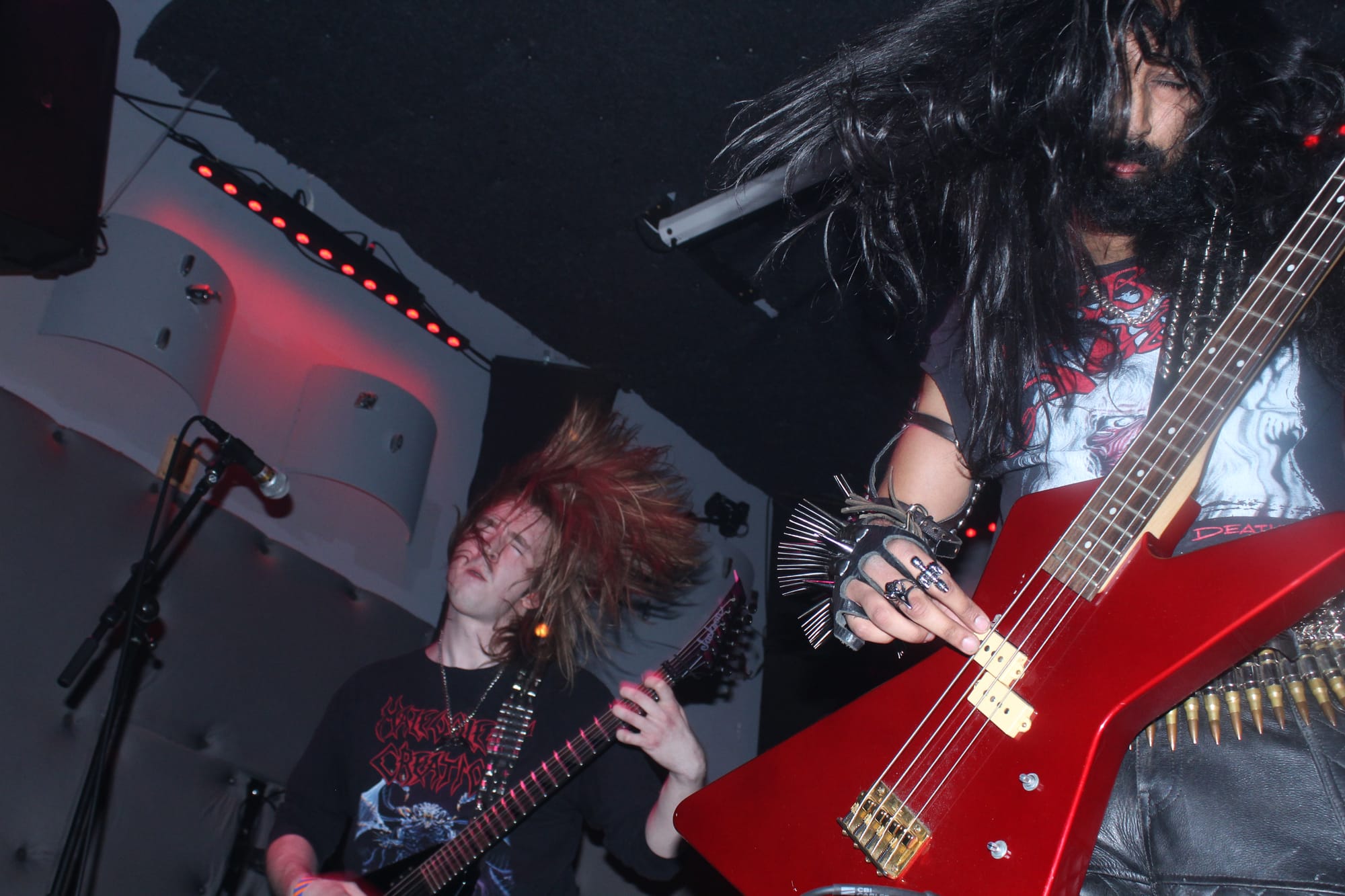
Born from extreme aggression and rigorous musicianship and inspired by bands like Vitriol and Angelcorpse, Obliviator is a young technical black thrash band from Maryland.
What was conceptualized as a cosmic, dissonant death metal project would evolve into the Obliviator seen today, blending modern technicality with classic aggression to create a unique addition to the DMV thrash scene.
The concept came to guitarist and founder Garrison Wright in early 2024, originally as a dissonant, cosmic solo project.
Wright credits their parents for introducing them to extreme music. They recalled one time when they were five where their mother showed them a Pantera song, “Cowboys from Hell.”
“It really stimulated my imagination… I would imagine the color black in my head, and I would see it so vividly, and it almost felt like I was in a place that was just nothing but blackness,” they said. “Which sounds really cheesy, but at the time, I had never interacted with a piece of art in my five year old life that made me feel like that.”
With their parents’ encouragement, Wright picked up the guitar at 13 and started writing music, but never felt fully satisfied with the results until they were able to collaborate with other artists with similar taste.
Two solo black metal projects predated Obliviator, but Wright wanted the experience of working with other musicians, which they felt would help them hold themself accountable.
After finding the band's original lineup, Wright saw Obliviator going in a different direction. With the help of new members, their music became more extreme and their themes shifted to a religious focus with war iconography.
Wright keeps specific imagery in mind during the songwriting process. They want their riffs to evoke a sense of danger, to sound “alive and volatile,” like the reflex of being snarled at by a rabid animal.
Aggression is a key element of Wright’s vocal style as well, channeling a feral energy.
“I want every syllable to just be delivered with such impreciseness that it makes you feel like whoever is saying this is so angry that they're losing the ability to form coherent sentences,” they said. “I wanted it to sound not even human, like a being that is so angry that its faculties for language have atrophied.”
Obliviator’s sound combines the aggression of old school thrash “with a modern lens that incorporates more complex musical ideas,” Wright said.
The band had their first show in late December, 2024 at the now-closed venue Simple Bar in Northwest Washington, D.C. Wright cites this as their favorite performance thanks to the great turnout and community support. Footage from previous live performances can be found here.
“It was just self-actualizing,” they said. “I had never played a show like that before, but it felt like I already knew exactly what to do because I'd been visualizing it for so long.”
Visualizing their success was a key motivator for becoming a better musician, Wright said.
“I didn't realize at the time what I was doing, but I was visualizing me succeeding, and that was an incredibly helpful thing,” they said. “You gotta do all that silly shit.”
Currently, Obliviator’s lineup has brought in the talent of two members of D.C.’s upcoming thrash legends, Desolus.
Drummer Bileh Dougsiyeh joined the project in June, originally as a live drummer. After enjoying their time working with him, both Wright and their former bassist invited him to join the band as a permanent drummer.
The trait Wright admires the most about Dougsiyeh is his precision and tempo. In the rare instance that he makes a mistake, Wright said, Dougsiyeh recovers quickly and gets back on track.
In November, bassist Vivek Rangarajan approached the band, offering to contribute to the project.
“One aspect of Obliviator that drew me into joining was the writing of the music. The way Garrison constructs their songs is very unique but also still catchy and memorable,” Rangarajan said. “Obliviator has a very unique sound and feel that most bands don’t have. I feel this music stands out among the sea of black thrash metal.”
Going forward, Obliviator’s current goal is to finish and release their EP so the band can focus on their upcoming album. After the EP, Wright envisions a wider-scoping release that integrates storytelling aspects.
“I want to follow a similar trajectory that Vitriol followed in their first two albums, where the EP is very aggressive but straightforward in its attack,” they said. “With the album, I want to expand on ‘Why is this the way that it is?’ I want it to feel less like a collection of really good tracks and more like a single, cohesive work.”